
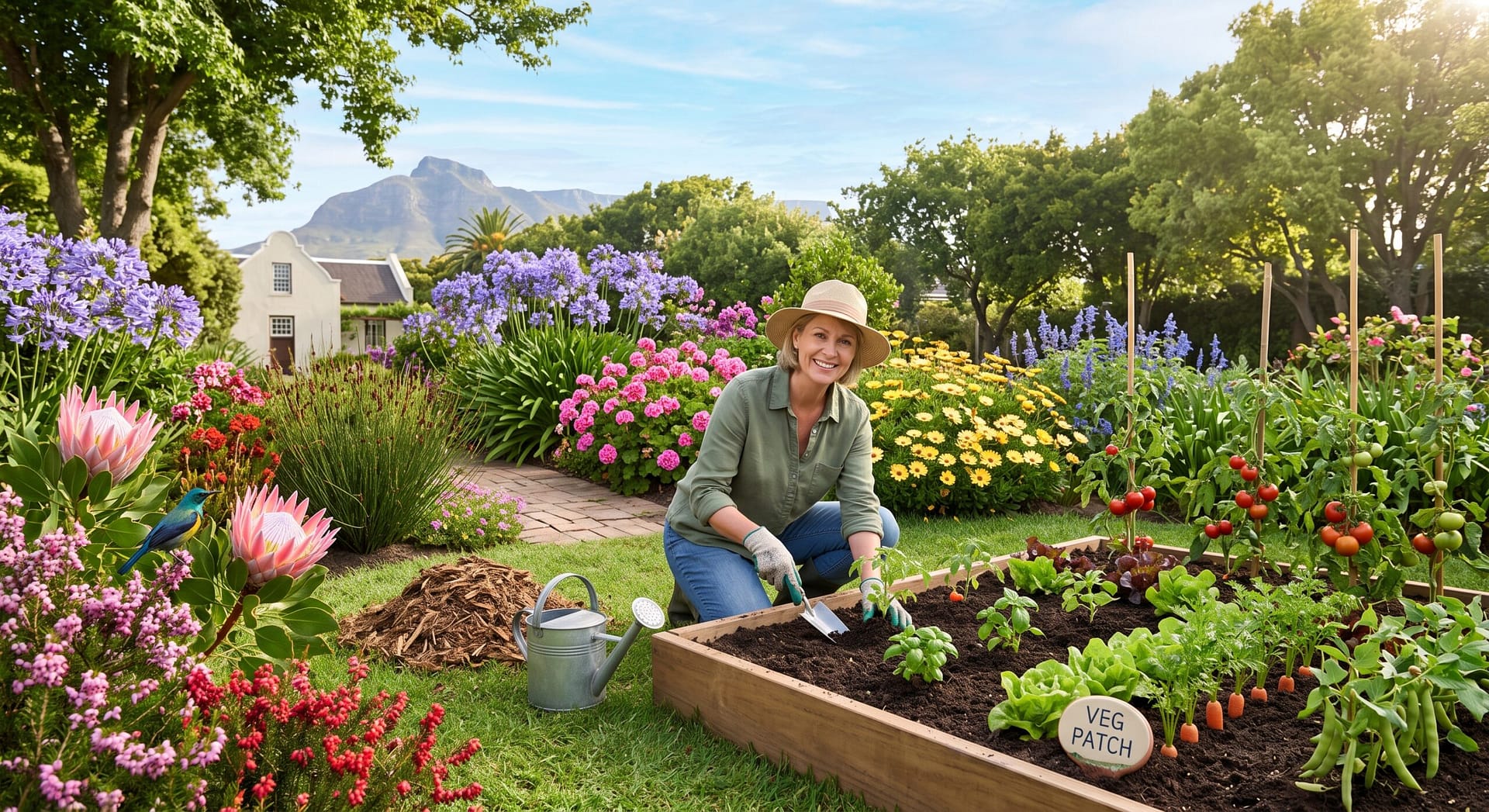
Rondebosch Spring Garden Guide
Rondebosch offers a fantastic environment for gardening in Cape Town. Positioned in the Southern Suburbs with generous winter rainfall and plenty of spring sunshine, spring (September–November) is an ideal time for vigorous plant growth.
Thinking of Selling in Spring? Read our latest post on Preparing to Sell your Rondebosch Property in Spring.
Gardening tips specifically for Rondebosch:
Refresh your soil Add a generous layer of organic compost to vegetable beds and ornamental borders to improve nutrient levels and moisture retention in faster-draining sandy loam or gravelly soils. Mulch around plants to conserve moisture before the dry summer arrives. If you’re growing indigenous fynbos, avoid rich fertilisers—they thrive in nutrient-poor, sandy, well-draining soils.
Plant for colour
Spring is an excellent time to plant:
- Agapanthus
- Pelargoniums (geraniums)
- African daisies (Osteospermum)
- Salvias
- Clivias (in shaded, wind-sheltered spots)
- Indigenous bulbs and vygies
TIP: These perform exceptionally well in Rondebosch, handling full sun while attracting bees, butterflies, and sunbirds.
Take advantage of Rondebosch’s climate
Because Rondebosch receives plentiful sunshine alongside seasonal winter rains and well-draining soils:
- Cape Flats sand fynbos and sun-loving indigenous species flourish effortlessly.
- Ferns and hydrangeas thrive in shaded, protected courtyards or beds when provided with extra mulch and regular summer watering.
- Camellias and azaleas perform well under mature trees if the soil is enriched with organic matter to maintain moisture and acidity.
Start your vegetable garden
September is a great time to sow or plant:
- Tomatoes
- Beans
- Cucumbers
- Pumpkin and squash
- Beetroot
- Carrots
- Lettuce
- Basil
TIP: Wait until nights are consistently mild before planting heat-loving crops like tomatoes outdoors.
Prune and tidy
- Remove wind- or frost-damaged growth.
- Lightly prune spring-flowering shrubs after flowering.
- Deadhead flowering plants to encourage more blooms.
Prepare for summer
As Cape Town’s dry, windy summer approaches:
- Install or check drip irrigation.
- Water deeply but less frequently to encourage deep, resilient root systems.
- Mulch 5–8 cm deep to reduce evaporation in light, sandy soil.
Support local wildlife
Consider planting indigenous species such as:
- Proteas
- Leucadendrons
- Ericas
- Restios
- Buchu
TIP: These are well adapted to local soil types and wind exposure, providing food and habitat for nectar-feeding birds and pollinators. Spring is one of the best times to establish them.
Watch for pests
As temperatures rise, keep an eye out for:
- Aphids on roses and vegetables
- Snails and slugs after rain
- Caterpillars on brassicas
Inspect plants regularly so problems can be managed before they become severe.
With Rondebosch’s bright, open environment and adaptable soils, spring is an ideal time to combine water-wise fynbos, protected shade features, and a productive vegetable patch—giving you colour, biodiversity, and fresh produce through the warmer months.
Rondebosch features a versatile microclimate: warm, sunny summers, good winter rainfall, and soils ranging from sandy loam to richer alluvial ground near the river. That means you can successfully grow both hardy indigenous Cape plants and a wide range of vegetables, herbs, fruit, and ornamentals.
Top 20 plants for a Rondebosch garden
- Agapanthus – Long flowering season, low maintenance (Sun to part shade)
- Clivia – Excellent for shady, sheltered spots (Shade)
- Hydrangea – Flourishes in shaded beds with enriched, moist soil (Morning sun, afternoon shade)
- Camellia – Enjoys organic, acid-boosted soils in cool microclimates (Part shade)
- Azalea – Thrives in sheltered, woodland-style beds (Shade)
- Strelitzia (Bird of Paradise) – Dramatic flowers, drought-tolerant, and handles breeze well (Full sun)
- Osteospermum (African Daisy) – Loves full sun and flowers for months (Full sun)
- Pelargonium – Colourful, heat-tolerant, and drought-resistant (Sun)
- Salvia – Attracts bees and sunbirds (Full sun)
- Plumbago – Tough, wind-resistant blue flowers (Sun)
- Protea – Iconic Cape flower, ideal for well-drained sandy soil (Sunny, well-drained position)
- Restio – Architectural texture, copes well with summer winds (Sun)
- Erica (Cape Heath) – Spectacular indigenous flowers for sandy soils (Sun)
And edibles…
- Tomatoes – Excellent summer crop in sunny spots (Full sun)
- Lettuce – Succession plant through spring (Morning sun)
- Carrots – Easy in loose, well-drained soil (Full sun)
- Bush beans – Reliable and productive (Full sun)
- Basil – Perfect companion for tomatoes (Full sun)
- Lemon tree – Performs very well in sunny Southern Suburbs gardens (Full sun)
- Blueberries – Thrive in pots or acidic, well-drained soil with irrigation (Morning sun)
These plants are widely recommended for Cape Town gardens, and indigenous species such as proteas, ericas, restios, agapanthus, pelargoniums, plumbago, and osteospermums are particularly well adapted to local soils while supporting biodiversity.
If your goal is the most beautiful garden Choose: Hydrangeas, Camellias, Clivias, Agapanthus, Strelitzia, Salvias, Plumbago, Osteospermums.
If your goal is to attract birds and butterflies Plant: Proteas, Salvias, Wild Dagga (Leonotis leonurus), Plumbago, Agapanthus, Erica, Restios.
If your goal is to grow food Plant: Tomatoes, Lettuce, Carrots, Bush beans, Basil, Lemon tree, Blueberries.
Rondebosch is an ideal suburb to combine sun-loving, wind-tolerant fynbos with sheltered shade features and a productive vegetable patch, making the most of its bright climate and adaptable soils.